Taste of the Mediterranean: A Local’s Dinner Secret in Tripoli
You know that feeling when you stumble upon a meal so authentic it redefines your idea of flavor? In Tripoli, Libya, far from tourist traps, I found exactly that—a tucked-away family spot where the hummus is creamy, the lamb slow-cooked to perfection, and every bite tells a story. This isn’t just dinner; it’s a cultural handshake, served warm with flatbread and endless stories. In a city where the Mediterranean breeze carries the scent of cumin and fresh herbs, dining is more than sustenance—it’s a rhythm of life. For travelers willing to look beyond headlines, Tripoli offers an intimate culinary world rooted in generosity, history, and deep familial bonds. This is not a place of flashy restaurants or curated experiences, but one where the true heart of Libya beats strongest around the dinner table.
Why Tripoli’s Dining Scene Stands Out
Tripoli’s food culture is a quiet masterpiece shaped by centuries of crossroads living. Nestled along the North African coast, the city has long served as a gateway between the Mediterranean and the Sahara, absorbing flavors and techniques from Ottoman, Arab, Berber, and Italian influences. Unlike the spice-heavy cuisines of Morocco or the grilled-meat dominance of Egypt, Tripoli’s palate strikes a delicate balance—earthy grains meet bright citrus, slow-cooked meats blend with tangy date syrups, and every dish carries the subtle imprint of maritime trade and inland tradition. What truly sets Tripoli apart, however, is not just its ingredients, but the philosophy behind them. Meals are not rushed affairs but central events in daily life, often beginning after sunset and lasting well into the night. Families gather not just to eat, but to reconnect, debate, and celebrate the simple joy of being together.
The city’s coastal position ensures a steady supply of fresh fish and seafood, often grilled simply with lemon and olive oil, letting natural flavors shine. Meanwhile, the fertile hinterlands supply tomatoes, olives, figs, and mint—ingredients that appear in nearly every home-cooked meal. Seasonality plays a crucial role; Libyans do not chase exotic imports but honor what the land offers at any given time. In spring, wild greens are gathered for savory pies; in summer, melons and cucumbers cool the palate; autumn brings dates and figs, while winter sees hearty stews simmering for hours. This deep respect for timing and terroir is rarely discussed in tourist guides, yet it forms the backbone of Tripoli’s culinary authenticity.
Another defining feature is the absence of rigid restaurant hierarchies. While larger cities might boast Michelin-inspired dining, Tripoli’s best meals are often found in unmarked homes, family-run stalls, or neighborhood kitchens passed down through generations. There’s no need for glossy menus or Instagrammable plating—just honest food made with care. This culture of understated excellence reflects a broader Libyan value: humility in hospitality. A host will downplay their cooking even as they serve five courses, insisting the meal is “nothing special.” Yet, in that very gesture lies the soul of the experience—an offering made not for praise, but for connection.
Beyond the Menu: The Heart of Libyan Hospitality
In Tripoli, a meal is never just about food. It is an extension of the diwaniya—a traditional gathering space where guests are welcomed with open arms, endless tea, and unscripted conversation. The concept is deeply embedded in Libyan social life, especially among families and elders, and it transforms dining into something far richer than sustenance. When invited into a home or even a local eatery, visitors quickly learn that time moves differently here. There is no rush to clear the table or usher guests out. Instead, meals unfold like stories, each course a new chapter, punctuated by laughter, stories of childhood, or reflections on the weather. A simple dinner can stretch into four or five hours, not because people are idle, but because presence is valued above efficiency.
Tea is the constant companion throughout these evenings—sweet, mint-infused, and poured from a height to create a frothy top, a technique believed to enhance both flavor and hospitality. It is offered the moment a guest arrives and continues to be refilled throughout the night. Refusing tea is seen as a subtle rejection, so even those who don’t drink it are encouraged to accept at least one cup as a sign of respect. Alongside tea come small plates of dates, nuts, or sweet pastries—always more than needed, always offered with insistence. This generosity is not performative; it is a cultural reflex, rooted in the belief that feeding others is one of life’s highest honors.
Storytelling flows as freely as the tea. Elders recount tales of life before modern roads, of fishing trips with their fathers, or of family migrations across the desert. Younger guests listen, interject, and eventually share their own memories. These conversations are not curated for outsiders; they unfold naturally, drawing visitors into the fabric of local life. In this way, a meal becomes a bridge—not just between hunger and fullness, but between strangers and kin. It is in these unguarded moments, over a third cup of tea and a plate of warm bread, that travelers often feel they are not just observing culture, but living it.
A Night at a Hidden Family-Run Eatery
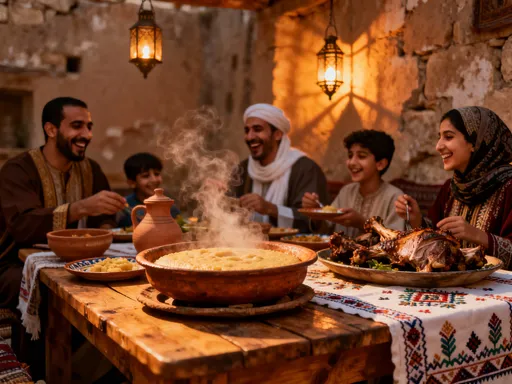
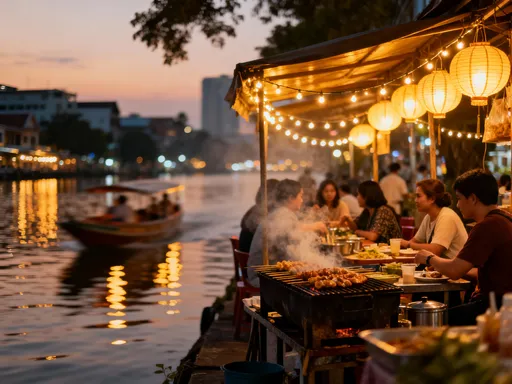
One evening, deep in the Al-Furna district, a narrow alleyway led to a low-lit courtyard where a family-run eatery has operated for over fifty years. There are no signs, no website, and no English menu—just word-of-mouth loyalty from locals who return week after week. The space is simple: stone walls draped with ivy, wooden tables covered in red-and-white checkered cloths, and the constant sizzle of meat on an open grill. The air carries the scent of cumin, garlic, and burning charcoal, mingling with the faint sound of oud music drifting from a radio in the back.
The owner, a man in his sixties named Mahmoud, greets each guest like a long-lost nephew, guiding them to seats and immediately pouring mint tea. His daughter brings warm loaves of khobz taboon, fresh from the clay oven, while his son mans the grill, turning skewers of marinated lamb and chicken seasoned with huli-huli spice—a blend of paprika, coriander, and a hint of chili. The rhythm of the kitchen is unhurried, each step deliberate, each dish assembled with care. This is not fast food; it is food made for people, not profit.
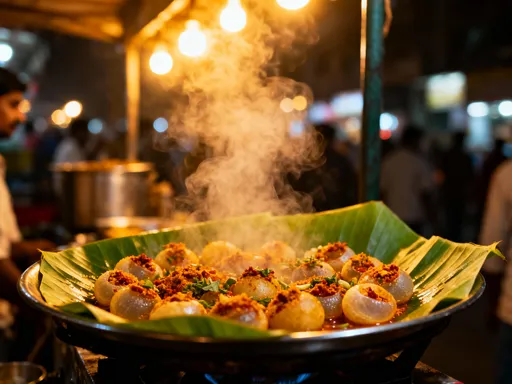
The star of the evening is bazeen, a traditional Libyan dish that few tourists ever encounter. It consists of a dense barley dough shaped into a dome, topped with a rich stew of lamb, potatoes, and tomatoes, and finished with a tangy sauce made from dried fenugreek and chili. It is served communal-style, meant to be broken apart by hand and shared. The texture is unique—chewy, hearty, deeply satisfying—and every bite carries the weight of generations. Alongside it, a plate of shakshuka with a Libyan twist: instead of the usual peppers and onions, it features preserved lemons and green olives, giving it a briny brightness that cuts through the richness of the bazeen.
As the night deepens, more dishes appear—stuffed zucchini, lentil soup, a simple salad of tomato and cucumber dressed with lemon and olive oil. There is no rush to order or to leave. Neighbors stop by, greet the family, and sit down uninvited, joining the meal as if it were their own. This fluidity—between host and guest, public and private—is what makes such places so rare and so precious. In a world of reservations and fixed seating, this is dining as it was meant to be: spontaneous, generous, and deeply human.
Must-Try Dishes and Where to Find Them
For travelers seeking authenticity, knowing what to eat—and where—is essential. Among the must-try dishes is asida, a thick porridge made from wheat flour and butter, often served during religious celebrations and family gatherings. It is eaten communally, dipped into honey or date syrup, and represents one of Libya’s oldest culinary traditions. Another staple is tharid, a comforting dish of shredded flatbread soaked in meat broth and topped with lamb or chicken. Legend has it that this was a favorite of the Prophet Muhammad, and in Tripoli, it is still prepared with reverence, especially during Ramadan.
Mashi vegetables—stuffed bell peppers, zucchini, and tomatoes filled with spiced rice and minced meat—are another highlight, often served at family lunches. The filling varies by household, with some adding pine nuts, others raisins, and a few a splash of rosewater for fragrance. These dishes are rarely found in commercial restaurants but are abundant in home kitchens and local markets. One of the best places to sample them is Souq al-Juma, a sprawling open-air market that comes alive every Friday. Here, women in colorful headscarves sell homemade meals from large aluminum trays, offering tastes of everything from stuffed grape leaves to slow-cooked okra stew.
Street food also offers rich rewards. Look for small stalls selling mahshi malfoof, cabbage rolls filled with rice and herbs, or samsa, savory pastries shaped like triangles and baked until golden. These are often sold near mosques after prayer times or in busy squares where workers gather for midday breaks. The key to finding the best options is to follow the locals—wherever there is a line of men in traditional robes or women carrying reusable containers, there is likely excellent food inside. Avoid tourist-centric areas near the port or major hotels, where prices are inflated and flavors diluted for foreign palates.
For those willing to take a step further, joining a community meal or accepting a dinner invitation from a local family is the ultimate way to experience Libyan cuisine. While such opportunities require trust and patience, they are often arranged through guides, cultural centers, or language exchanges. These meals are not staged for visitors; they are real, unfiltered moments of daily life, where food is not the focus, but the vehicle for something deeper—belonging.
Navigating Dining Culture: Etiquette and Expectations
Understanding local dining customs enhances both respect and enjoyment. One of the most important rules is to always accept tea when offered. It is not merely a beverage but a symbol of welcome, and declining can be seen as dismissive. Similarly, eating with the right hand is customary, as the left is traditionally considered unclean. While utensils are sometimes provided, many dishes—especially bazeen or asida—are meant to be eaten by hand, using pieces of flatbread to scoop up stews and sauces.
Dinners in Tripoli typically begin late, often after 8:00 or even 9:00 PM, especially on weekends or during religious holidays. Punctuality is flexible; arriving exactly on time may even be seen as overly formal. Guests are expected to relax, accept second and third helpings, and allow the evening to unfold at its own pace. Rushing through a meal or asking for the bill immediately after eating is considered impolite. Instead, linger, engage in conversation, and let the host decide when it is time to conclude.
Alcohol is not served in Libya, as the country adheres to Islamic law. However, this does not mean a lack of flavorful drinks. In addition to mint tea, visitors should try sherbet al-dibs, a sweet, thick syrup made from reduced grape juice, often diluted with water and served chilled. Another favorite is amar al-din, a drink made from apricot leather, known for its tangy sweetness and digestive benefits. These beverages are not afterthoughts but integral parts of the meal, carefully paired with different dishes to balance flavors and aid digestion.
It is also common for hosts to insist that guests eat more, even when they say they are full. This is not pressure but affection—a way of showing care. A polite way to decline is to place your hand lightly over your plate while saying, “Shukran, kamil” (Thank you, I’m full). Above all, the guiding principle is generosity: give it freely, receive it graciously, and let the meal be what it is meant to be—a shared act of kindness.
Balancing Safety and Adventure for Food Travelers
It is no secret that Libya has faced political instability in recent years, and many international governments issue travel advisories cautioning against non-essential travel. These concerns are valid and should not be ignored. However, for those who choose to visit, particularly in Tripoli, the reality on the ground can be more nuanced. The city center, especially historic districts like the Medina and Al-Furna, remains active and relatively safe during daylight hours. Locals go about their daily lives—shopping, working, dining—with a sense of normalcy that travelers often find reassuring.
The key to safe food exploration lies in smart choices. Travelers should prioritize daytime visits to markets and eateries, avoid isolated areas after dark, and rely on local guidance whenever possible. Hiring a trusted local guide—not just for sightseeing but for dining introductions—can make a significant difference. Such guides know which neighborhoods are stable, which families are welcoming to visitors, and how to navigate cultural nuances with respect. They can also help translate menus, explain ingredients, and ensure that dietary needs are accommodated without offense.
Staying in populated, well-known areas increases both safety and authenticity. The central souqs, the waterfront promenade, and family-run restaurants in residential zones offer genuine experiences without venturing into higher-risk zones. Additionally, connecting with cultural or language exchange groups can open doors to home dinners and community meals in secure, welcoming environments. These settings are not only safer but often more meaningful, allowing travelers to build real connections rather than fleeting encounters.
It is also wise to remain informed. Checking in with embassies, monitoring local news, and maintaining communication with hosts or guides helps ensure a smooth and responsible visit. The goal is not to eliminate risk entirely—that is impossible anywhere—but to manage it with awareness and respect. For those who take these steps, Tripoli’s culinary world remains accessible, rewarding, and profoundly moving.
How Food Connects You to Libya’s Soul
In the end, a meal in Tripoli is not measured in calories or courses, but in moments of connection. It is in the way an elderly woman smiles as she hands you a piece of warm bread, the way a father teaches his son to grill meat just right, the way strangers become companions over a shared plate of stew. These are not performances for tourists; they are the quiet, everyday rhythms of a culture that values presence, patience, and generosity above all.
Food here is not a commodity but a language—one that speaks of history, resilience, and love. Each dish carries echoes of ancestors who cooked over open fires, of families who survived droughts and wars by sharing what little they had, of women who passed down recipes not in books, but through hands-on teaching and patient repetition. To eat in Tripoli is to be invited into that lineage, however briefly, to be treated not as a customer, but as a guest.
For the curious traveler, this is the ultimate reward—not exotic flavors alone, but the sense of being seen, welcomed, and included. It is a reminder that beyond borders and headlines, humanity shares a common table. In a world that often feels divided, such moments are rare and precious. They do not change history, but they do change perspectives.
So if you ever find yourself in Tripoli, step away from the guidebooks. Let a local lead you down a quiet alley, into a courtyard lit by lanterns, where the air is thick with the scent of grilled meat and mint tea. Sit down, accept the first cup of tea, and let the meal unfold. You may not leave with a full stomach alone, but with a fuller heart. Because in Tripoli, dinner is not just a meal—it is an act of trust, a gesture of peace, and a quiet invitation to belong.