What Nobody Tells You About Gyeongju’s Cultural Soul
You know what? Gyeongju isn’t just temples and tombs—it’s a living museum where every stone tells a story. I went expecting quiet ruins, but found buzzing markets, kimchi-making grandmas, and ancient vibes mixed with modern life. But here’s the real tea: without the right mindset, you’ll miss the magic. This city doesn’t hand out experiences—you gotta dig for them. Let me show you how to truly *feel* Gyeongju, not just tick it off your list.
The Myth of the "Typical" Gyeongju Tourist
Most travelers arrive in Gyeongju with a mental checklist: Bulguksa Temple, Seokguram Grotto, Cheomseongdae Observatory, and the Tumuli Park with its grass-covered burial mounds. These sites are undeniably significant—UNESCO World Heritage landmarks that reflect the brilliance of the Silla Dynasty, which ruled the Korean Peninsula for nearly a millennium. But the danger lies in treating Gyeongju like a museum exhibit to be consumed quickly and moved on from. Too many visitors follow the same path, snapping photos at each stop, then boarding tour buses to the next destination, emotionally untouched and culturally unengaged.
The myth of the "typical" tourist experience assumes that simply being near ancient relics equates to understanding them. Yet, history is not absorbed through proximity alone. Without intention, even the most sacred sites become backdrops for social media posts. The irony is that Gyeongju, often called "the museum without walls," is one of the few places where history and daily life coexist so naturally. But if you’re only looking for grand monuments, you’ll overlook the quiet, living traditions that breathe soul into the city.
Many leave Gyeongju feeling underwhelmed, not because the city failed them, but because they approached it like a theme park rather than a community. The disappointment often stems from an expectation of instant spiritual elevation or awe, which rarely happens on demand. True cultural connection is not a tourist attraction—it’s a slow unfolding. It requires presence, openness, and a willingness to step off the beaten path, not just geographically, but mentally and emotionally.
When travel becomes a race to cover ground, the deeper layers remain buried. Gyeongju rewards those who resist the urge to rush. It invites you to shift from sightseeing to sensing—feeling the weight of centuries not in guidebooks, but in the rhythm of a grandmother pounding rice cake in a back alley, or the echo of temple bells carried on the morning wind. The city’s soul isn’t locked behind glass; it’s alive in the everyday. And if you come only for the highlights, you’ll miss the heartbeat.
Pitfall #1: Overlooking Daily Life as Culture
One of the most common mistakes visitors make is equating culture solely with historical architecture and archaeological sites. In Gyeongju, this narrow view leads travelers to ignore the vibrant, ongoing traditions that shape the city’s identity. Culture is not just preserved—it’s practiced. And nowhere is this more evident than in the city’s bustling morning markets, neighborhood tea houses, and local schools where children learn traditional music and dance.
Take the Gyeongju Jungang Market, for example. This isn’t a tourist bazaar selling souvenirs. It’s where residents buy fresh vegetables, dried fish, and handmade tofu. Stalls overflow with seasonal ingredients—wild greens in spring, persimmons in autumn. Elderly vendors chat with regulars, their voices rising and falling in the local dialect. A simple question about a strange-looking root vegetable might lead to a ten-minute conversation, complete with hand gestures and a free sample. These interactions, fleeting as they may seem, are cultural exchanges as authentic as any museum display.
Another overlooked gem is the humble bunsik stall—small eateries serving comfort foods like kimbap, tteokbokki, or sundubu-jjigae. Sit on a plastic stool, order what the locals are eating, and you might find yourself next to a schoolteacher on her break or a retired craftsman sharing stories about how his father built parts of the city’s restoration projects. One traveler, sipping barley tea at a corner stall, struck up a conversation with an elderly woman who invited her home to watch her prepare kimchi for winter. That single moment became the highlight of her trip—not because it was planned, but because it was real.
When you ignore these everyday rhythms, you flatten Gyeongju into a two-dimensional postcard. The city becomes a series of static images rather than a living, breathing community. Culture isn’t just in the past—it’s in the way people greet each other, how meals are shared, and how traditions are passed down informally, from hand to hand. By focusing only on the monumental, you miss the mosaic of small, meaningful moments that define what it means to be part of this place.
Pitfall #2: Misreading the Pace of Gyeongju
Gyeongju moves differently. Its rhythm is slow, deliberate, and contemplative—a reflection of its deep connection to history and nature. Yet many visitors, accustomed to fast-paced city tours, try to "do" Gyeongju in a single day. They rush from Bulguksa Temple to Seokguram Grotto, then to the museum, and finally to Tumuli Park, checking each box with growing fatigue. By evening, they’re exhausted, convinced they’ve "seen it all," but emotionally disconnected from everything they’ve encountered.
The problem isn’t the itinerary—it’s the mindset. Sacred spaces like Bulguksa were designed for reflection, not rapid consumption. The temple’s stone bridges, lotus ponds, and wooden halls are arranged to guide the visitor through a spiritual journey, not a photo op. When you sprint through its courtyards, you miss the subtle details: the way sunlight filters through pine trees onto ancient roof tiles, the sound of wind chimes carried on a breeze, the quiet bow of a monk passing by. These are not background elements—they are the essence of the experience.
Seokguram Grotto, perched on a mountainside, offers one of the most serene Buddhist statues in the world. But arriving at noon with a crowd means jostling for space, speaking in hushed tones not out of reverence, but necessity. Contrast that with a visit at dawn, when the air is crisp and the grotto is nearly empty. The statue of Buddha, facing the East Sea, catches the first light of day—a moment of profound stillness that no photograph can capture. This is the power of lingering: when you slow down, the city reveals itself in layers.
Trying to see everything in one day doesn’t maximize your experience—it minimizes it. Gyeongju is not a checklist. It’s a state of mind. The city invites you to stay, to return, to notice how the light changes on a stone pagoda at different hours, or how a single tree in a courtyard seems to age with the seasons. When you allow yourself to move at Gyeongju’s pace, you stop being a spectator and become a participant in its quiet rhythm.
Pitfall #3: Romanticizing the Past, Ignoring the Present
It’s easy to fall into the trap of seeing Gyeongju as a city frozen in time—a relic of the Silla Dynasty, untouched by modernity. Guidebooks and promotional materials often reinforce this image, showing serene temples and ancient tombs without mentioning the schools, supermarkets, and family-run workshops that make up daily life. But this romanticized view does a disservice to both the city and its people. It turns a living community into a historical exhibit and overlooks the ways in which tradition is actively maintained today.
Locals in Gyeongju aren’t reenactors—they’re custodians of culture. They keep traditions alive not in isolation, but as part of their everyday lives. Take the making of hanji, traditional Korean paper. You can see hanji in museums, displayed behind glass, but the real story is in the small studios where artisans still prepare mulberry bark, spread pulp by hand, and dry sheets in the sun. One such workshop, run by a third-generation craftsman, welcomes visitors to try the process themselves. Feeling the texture of the wet pulp, watching it transform into delicate paper—it’s a tactile connection to history that no plaque can provide.
Food is another living tradition. While many tourists eat at restaurants catering to foreign tastes, those who seek out local homes or community events experience the true heart of Gyeongju’s culinary culture. Kimjang, the annual kimchi-making ritual, is a perfect example. In late autumn, families gather to prepare hundreds of jars of kimchi for the winter. It’s a day of labor, laughter, and generational knowledge—grandmothers teaching grandchildren how to season the perfect batch. Some community centers now offer short kimjang experiences for visitors, not as performances, but as genuine invitations to participate.
Cultural respect means seeing people, not just artifacts. When you recognize that tradition is not a costume worn for tourists, but a way of life, your entire perspective shifts. You begin to appreciate Gyeongju not as a museum piece, but as a resilient, evolving community that honors its past without being trapped by it. The city’s soul isn’t in the past—it’s in the present, carried forward by those who live it every day.
Choosing the Right Moments Over the Right Places
In Gyeongju, timing often matters more than location. A sunrise visit to Cheomseongdae Observatory, the oldest astronomical structure in Asia, offers a completely different experience than a crowded afternoon tour. As the first light hits the granite stones, casting long shadows across the grass, you can almost feel the ancient astronomers calculating the seasons. There are no loudspeakers, no tour guides—just silence and the slow awakening of the sky. These quiet moments, unplanned and unhurried, often become the most memorable.
Seasonal events also offer unique opportunities for connection. The Gyeongju Cherry Blossom Festival in spring transforms the city into a pink-hued dream, with petals drifting down the Cheonggyecheon Stream. But beyond the beauty, the festival is a community celebration—locals picnic under trees, children fly kites, and elders play traditional games. Attending as a participant, not just an observer, changes everything. Rent a bike, join a hanbok photo walk, or simply sit on a bench and share a rice cake with a family—you’ll leave with more than memories, you’ll leave with warmth.
For those seeking solitude, lesser-known spots offer profound experiences. Muryangsa Temple, tucked away in the hills, is rarely crowded. Its stone lanterns and moss-covered statues exude a quiet dignity. Unlike the more famous temples, there’s no souvenir shop, no loud announcements—just the sound of wind through the trees. Similarly, the outer edges of Tumuli Park, where the burial mounds stretch into open fields, offer space for reflection. Sitting on the grass, watching the sun set behind a 1,500-year-old mound, you might feel a deep sense of continuity—a connection to those who came before, and those who will come after.
Some of the most powerful moments are the smallest. Watching an elderly woman place a bouquet of chrysanthemums at a small shrine, bowing silently before walking away. Seeing a child point at a stone warrior and ask, "Did real kings live here?" These unscripted scenes carry more emotional weight than any guided tour. They remind you that Gyeongju is not just a place of the past—it’s a place where life continues, shaped by memory, respect, and quiet pride.
Practical Ways to Deepen Your Cultural Experience
Deepening your connection to Gyeongju doesn’t require grand gestures—just small, intentional choices. Start with language. Learning a few basic Korean phrases—"Annyeonghaseyo" (hello), "Gamsahamnida" (thank you), "Igoseo manseoyo?" (How much is this?)—can open doors. Locals appreciate the effort, even if your pronunciation is imperfect. A simple "Jeogi manseoyo" (That’s delicious) at a street food stall can spark a smile, a conversation, or even an unexpected invitation.
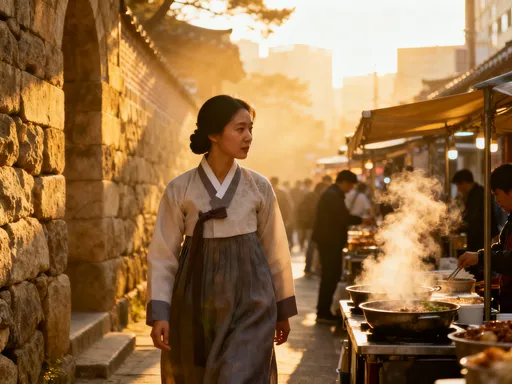
Participation is another powerful tool. Instead of just watching, try doing. Join a hands-on activity like pottery-making at a local studio, where you can shape clay using techniques passed down for generations. Or sign up for a kimchi-making class—many are hosted in private homes and include a meal with the family. Wearing hanbok, the traditional Korean dress, is another way to engage, but go beyond the photo op. Visit a temple or park in hanbok and notice how people interact with you differently—children wave, elders nod respectfully. It’s not a costume; it’s a gesture of respect.
Where you eat matters. Skip the tourist-heavy restaurants and follow the locals. Look for places with worn wooden tables, handwritten menus, and no English signage. A simple bowl of naengmyeon (cold buckwheat noodles) at a family-run shop might become your favorite meal. Ask your homestay host or guesthouse manager for recommendations—they’ll point you to spots where authenticity hasn’t been sacrificed for convenience.
Finally, change how you move through the city. Public buses and bicycles offer a different perspective than tour vans. On a bike, you feel the breeze, hear the birds, and notice details you’d miss from a window. You might stumble upon a small shrine tucked behind a school, or a group of women practicing traditional dance in a community hall. These unplanned discoveries are the soul of travel. When you slow down and choose your mode of transport wisely, Gyeongju reveals itself not as a destination, but as a journey.
Why Gyeongju Changes You—if You Let It
Gyeongju has a subtle way of changing people. It doesn’t shout its lessons—they emerge quietly, like mist rising from a temple pond. Over time, you may find yourself more present, more attentive to small details, more aware of the threads connecting past and present. The city teaches mindfulness not through lectures, but through its pace, its spaces, and its people.
Avoiding the common pitfalls—rushing, romanticizing, overlooking daily life—allows for genuine connection. You stop being a tourist and start feeling like a temporary local. You learn to listen more than speak, to observe before judging, to appreciate silence as much as celebration. This shift isn’t dramatic; it’s gradual, like the way moss slowly covers stone. But it’s real.
Many return home carrying more than souvenirs. They carry a sense of calm, a deeper respect for heritage, and a reminder that culture is not something to consume, but to live. Gyeongju doesn’t give you answers—it invites you to ask better questions. What does it mean to honor the past? How do communities preserve identity in a changing world? What parts of tradition can enrich modern life?
In the end, Gyeongju isn’t just a place you visit. It’s one you carry home. Its quiet wisdom stays with you—in the way you pause to watch the sunrise, in the care you take with handmade objects, in the gratitude you feel for moments of stillness. If you come with openness and respect, the city will share its soul. And that, more than any photo or checklist, is the true reward of the journey.