You’ve Never Seen Malta Like This – Gozo’s Hidden Flavors Will Blow Your Mind
Gozo isn’t just a side trip from Malta—it’s a slower, richer way to experience the Mediterranean. I spent two weeks living like a local, biking through quiet villages and tasting handmade products you won’t find anywhere else. This is travel that sinks in, not just passes by. From sun-dried tomatoes to fresh goat cheese, every bite tells a story. If you're craving authenticity over crowds, Gozo delivers. It offers a rare kind of intimacy—a place where the rhythm of life hasn’t been rewritten for tourists, where traditions are lived, not performed. In an age of fast itineraries and photo-chasing, Gozo invites you to pause, to taste deeply, and to connect. This is not about ticking off landmarks; it’s about letting a place leave its mark on you.
Why Gozo? The Case for Slow Travel in Malta’s Sister Island
Gozo stands apart from its more famous neighbor, Malta, in ways that matter deeply to travelers seeking meaning over momentum. While Valletta pulses with history and energy, and the Three Cities buzz with maritime life, Gozo unfolds at a different pace—one measured by the turning of olive groves in the wind and the rhythm of fishing boats returning at dawn. With a population of just over 30,000 and a land area of about 67 square kilometers, Gozo is compact, but its cultural depth is expansive. This island has not been reshaped by mass tourism; instead, it preserves a way of life that feels increasingly rare in the modern world.
Slow travel isn’t a buzzword here—it’s the default. Visitors who come to Gozo with a checklist of must-see sites often find themselves surrendering to the island’s gentle insistence on presence. There are no sprawling resorts or neon-lit promenades. Instead, you’ll find whitewashed village homes with iron balconies spilling with red geraniums, narrow lanes that wind without signage, and a quietude that allows you to hear your own thoughts again. This is the kind of place where you can walk into a bakery and be offered a sample of ftira, the Maltese cousin of focaccia, still warm from the oven, with no expectation of a sale.
The landscape itself encourages a slower pace. Rolling hills dotted with stone farmhouses, terraced fields clinging to cliffs, and secluded coves accessible only by foot or boat—these are not backdrops, but invitations. Each vista seems to say: stay awhile. The island’s topography, shaped by millennia of wind and sea, supports a form of travel rooted in curiosity rather than consumption. You’re not here to collect experiences like souvenirs; you’re here to let them shape you.
What makes Gozo particularly suited to mindful travel is its commitment to self-reliance. Generations of Gozitans have lived off the land and sea, cultivating vegetables in fertile valleys, tending goats on rocky pastures, and pressing oil from olives grown in family-owned groves. This agricultural heritage isn’t a museum exhibit—it’s alive, practiced daily by farmers, cheesemakers, and home preservers. When you buy a jar of sun-dried tomatoes or a round of goat cheese here, you’re not just purchasing a product; you’re participating in a tradition.
Arrival & First Impressions: Stepping Into Another Time
The journey to Gozo begins with a 25-minute ferry ride from Cirkewwa, the northern tip of Malta. As the boat pulls away from the dock, the noise of traffic and city life fades, replaced by the soft lap of waves and the cry of seagulls overhead. The crossing is uneventful in the best possible way—a liminal space that prepares you for the shift ahead. By the time you step onto the dock in Mġarr, Gozo’s main port, your mind has already begun to slow down.
From there, a short drive or bike ride leads to Victoria, the island’s capital, known locally as Rabat. The town centers around the Citadella, a fortified hilltop complex with origins dating back to the Bronze Age. But the true essence of Victoria isn’t found in guidebooks or tour groups—it’s in the quiet corners: the old woman sweeping her doorstep at 7 a.m., the barista who remembers your coffee order by the second day, the scent of jasmine drifting over a garden wall. Time here doesn’t race; it breathes.
Walk through the narrow streets of the old town, and you’ll notice the absence of chain stores and loud advertisements. Instead, family-run shops display handmade lace, local honey, and pottery fired in traditional kilns. The limestone buildings, glowing amber in the afternoon light, seem to absorb the sun’s warmth and release it slowly into the evening. There’s a stillness in the air, broken only by the distant chime of church bells or the laughter of children playing in a piazza.
Even the soundscape is different. In many tourist-heavy destinations, the soundtrack is dominated by engines, loudspeakers, and multilingual chatter. In Gozo, you hear the rustle of fig leaves, the clink of goat bells in the hills, and the low murmur of Maltese spoken in doorways. The language itself, a Semitic tongue with strong Italian influences, feels like part of the island’s soul—musical, expressive, and deeply rooted. For travelers accustomed to constant stimulation, this sensory shift can be profound. It’s not that Gozo lacks energy; it simply channels it differently—into care, craft, and community.
The Heartbeat of Gozo: Specialty Products Made by Hand
At the core of Gozo’s identity is its artisanal food culture. This is not a place of mass production or imported goods. Here, flavor is earned through patience and practice. The island’s most cherished products—Ġbejniet, sun-dried tomatoes, and extra virgin olive oil—are not made for export or Instagram; they are born of necessity, refined by tradition, and shared with pride. Each reflects a deep relationship between the people and their environment.
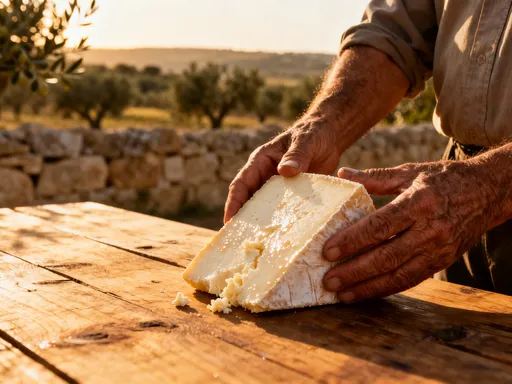
Ġbejniet, small round cheeses made from goat or sheep milk, are perhaps the most iconic. They come in several forms: fresh and soft, salted and cured, or peppered and aged in oil. The process is simple but exacting. Milk is collected at dawn, coagulated with natural rennet, shaped by hand, and then left to drain in woven molds. Depending on the desired outcome, the cheeses may be air-dried for days or stored in jars with olive oil and herbs. The result is a product with a tangy, earthy flavor that captures the essence of the island’s pastures—dry, sunbaked, and fragrant with wild thyme.
Sun-dried tomatoes are another staple, especially during the long, hot summers. Unlike the commercially processed versions found in supermarkets, Gozitan sun-dried tomatoes are made in small batches, often on family patios or rooftops. Ripe red tomatoes are sliced by hand, sprinkled with sea salt, and left to dry in the Mediterranean sun for several days. Once dehydrated, they are packed in locally pressed olive oil, sometimes with a sprig of wild oregano or a clove of garlic. The flavor is intense—sweet, smoky, and deeply savory—perfect for spreading on bread or stirring into pasta.
Olive oil, too, is more than a commodity here. Gozo has a long history of olive cultivation, with some trees estimated to be over 500 years old. The harvest, which takes place in late autumn, is a community event. Families gather in the groves, spreading nets beneath the gnarled branches and shaking the fruit loose by hand or with gentle rakes. The olives are taken to local presses, where they are crushed within hours to preserve freshness. The resulting oil is golden-green, with a peppery finish and a grassy aroma that speaks of rocky soil and sea air. It’s not just used in cooking—it’s a symbol of resilience, a liquid thread connecting past and present.
Meeting the Makers: Stories Behind the Flavors
To understand Gozo’s food culture, you must meet the people who sustain it. On a warm morning in Nadur, I visited a small farmstead on the eastern edge of the island. There, an elderly couple welcomed me into their courtyard, where rows of tomatoes sat on wooden trays under the sun. The woman, wearing a faded apron and wide-brimmed hat, explained the process with quiet pride. “We’ve done this for fifty years,” she said. “My mother taught me, and now my granddaughter helps.” Her husband, tending to a pen of goats nearby, called out that the cheese-making would begin tomorrow. “Only two liters today,” he added with a smile. “We make what we need.”
This spirit of modesty and purpose runs through Gozo’s artisanal community. At the Xagħra farmers’ market, I spoke with a man who pressed olive oil from a grove passed down through four generations. He didn’t have a brand name or a website—just a stack of unlabeled bottles and a willingness to explain how the weather had affected this year’s yield. “Too much wind in November,” he said, “but the oil is strong. Good for the heart.” His hands were stained with olive pulp, a mark of honest work.
In the village of Qala, I met a group of women preserving vegetables for the winter. They worked in a shaded outdoor kitchen, their movements synchronized from decades of practice. One peeled eggplants, another chopped peppers, while a third sterilized jars with boiling water. They laughed often, sharing stories between tasks. When I asked why they still did this every year, one woman paused and said, “Because it tastes like home. No supermarket can give you that.”
These encounters weren’t staged for tourists. There were no price lists in English, no Instagrammable backdrops. What I witnessed was daily life—ordinary, meaningful, and deeply rooted. The pride these producers take in their work isn’t loud or boastful; it’s quiet, woven into the way they handle their tools, the way they taste a sample before sealing a jar, the way they offer you a bite without hesitation. In a world where authenticity is often commodified, Gozo reminds us that it can still be genuine.
Where to Taste & Buy: Honest Spots Without the Hype
If you’re looking for authentic Gozitan flavors, the best places to visit are those embedded in daily life. The Xagħra Sunday market is a must—not because it’s famous, but because it’s real. Held in the village square, it features local farmers, beekeepers, and home preservers selling directly to the community. You’ll find baskets of figs, jars of capers in vinegar, wheels of Ġbejniet, and bundles of fresh herbs tied with string. Prices are fair, and vendors are happy to explain their methods if you show interest.
Small village delis, often attached to family homes, are another excellent source. In Mġarr and Għarb, I found unassuming shops with glass cases filled with homemade cheeses, cured meats, and marinated vegetables. These aren’t curated for tourists; they’re stocked for neighbors. The owners often speak limited English, but a smile and a pointing finger go a long way. One shopkeeper in Għasri even invited me to taste a new batch of peppered Ġbejniet before I bought it—“So you know what you’re getting,” he said.
For olive oil, the best approach is to visit a working press during the harvest season (November to January). While some farms offer tours, many are happy to welcome respectful visitors even without formal arrangements. Ask at a local guesthouse or market vendor for directions to a family-run operation. The experience of seeing olives crushed into pulp, then spun into oil, is unforgettable. And buying a bottle directly from the producer ensures that your money supports the people who made it.
Avoid the temptation to seek out “hidden gem” restaurants with perfect reviews. Instead, eat where locals eat. A simple village café serving ftira with tuna and sun-dried tomatoes, a seaside kiosk offering fresh sardines grilled over wood, or a family home that opens for Sunday lunch once a week—these are the places where Gozo’s flavors shine brightest. The meals may be humble, but they are honest, made with ingredients from nearby fields and waters.
Slow Living in Action: A Day in the Life on Gozo
Imagine waking at sunrise in a stone cottage in Munxar. The air is cool, scented with rosemary and sea salt. You brew coffee in a small stovetop pot and sit outside, watching the light spread across the valley. By 8 a.m., you’re on a bicycle, riding toward the coast. The road is quiet, lined with wildflowers and stone walls built by hand centuries ago. In Qala, you stop at a village bar for a roll filled with fresh cheese and tomato—simple, satisfying, and less than two euros.
By mid-morning, you reach the cliffs near Dwejra, where the Inland Sea glows turquoise below. You walk down the path, past the Fungus Rock, and sit on a bench carved from limestone. No crowds, no loudspeakers—just the sound of waves and the occasional call of a kestrel overhead. You bring out a small lunch: a piece of dark Gozitan bread, a few slices of cured Ġbejniet, and a handful of olives. It’s not a picnic; it’s a moment of connection.
In the afternoon, you visit a small farm near San Lawrenz. The owner shows you the goat pens, the drying racks, and the cool cellar where cheeses age in oil. You taste a sample—sharp, creamy, alive with flavor—and buy a jar to take home. There’s no shop, no receipt, just a handshake and a thank you.
As the sun begins to set, you cycle back through the village of Xlendi, where fishing boats bob in the harbor. You stop at a family-run restaurant on the water and order lampuki pie, a seasonal dish made with dolphin fish caught that morning, baked with tomatoes, capers, and potatoes. The owner brings a small glass of homemade wine—“On the house,” he says. “You’ve been out all day.”
This is not a curated itinerary. It’s the rhythm of Gozo itself—unhurried, unhyped, and deeply human. There are no timed entries or ticket queues. The only schedule is the sun, the tide, and the pace of your own breath. When travel feels this natural, it stops being an escape and starts feeling like a return—to simplicity, to presence, to what matters.
How to Visit Right: Practical Tips for a Meaningful Trip
To truly experience Gozo, certain choices make a difference. First, consider renting a bicycle instead of a car. The island is small, and roads—while not always wide—are generally safe for cycling. Biking allows you to move at the right speed, to notice details, and to stop wherever curiosity takes you. If you do drive, park on the edge of villages and explore on foot; the narrow streets are best walked.
Stay in a family-run guesthouse or farmhouse accommodation. These are often more affordable than hotels and offer a level of warmth and insight no chain property can match. Many hosts will share meal recommendations, lend you a bike, or even invite you to join a family dinner. Your presence becomes part of their daily life, not just a transaction.
Shop at local markets and buy directly from producers. This supports the island’s economy and ensures freshness. Bring a reusable bag and be open to products without labels or fancy packaging. Ask questions if you can—many locals appreciate the interest, even if your Maltese is limited. A few phrases go a long way: “Grazzi” (thank you), “Jien nofs il-kapa?” (Can I have half a kilo?), “Hemm bżonn ta’ l-iskola?” (Is there school today?)—the last one might get a laugh, but it shows effort.
Respect the environment. Gozo’s beauty is fragile. Stick to marked trails, avoid littering, and never remove natural items like stones or plants. The island’s farmers depend on clean soil and water, and tourism should never come at their expense. When visiting historical sites like the Ggantija Temples or the Citadella, follow posted rules and avoid touching ancient stones.
Finally, slow down. Resist the urge to see everything. Choose one or two places a day and let yourself linger. Have coffee twice in the same square. Return to the same beach at different times. Let a conversation unfold without rushing to the next stop. Gozo rewards patience. The deeper you go, the more you receive—not in souvenirs, but in memory, in taste, in feeling.
Gozo doesn’t shout—it whispers. Its magic lies in stillness, in the taste of cheese aged in sea air, in the warmth of a farmer sharing his harvest. Slow travel here isn’t a trend; it’s the only way that makes sense. When you leave, you won’t just remember what you saw—you’ll remember how you felt. And that’s the kind of journey that stays with you.