You Won’t Believe What I Saw in Kruger’s Wild Heart
There’s a moment at dawn in Kruger National Park when the world feels untouched—birds call, mist rises, and a lion’s roar echoes in the distance. I came for the animals, but stayed for the land itself. Beyond the safari checklists, Kruger’s true magic lies in its raw, unfiltered natural beauty—vast savannas, ancient baobabs, and rivers that pulse with life. This is not just a wildlife destination; it’s a landscape that breathes. Every rustle in the grass, every shift in the light, tells a story older than memory. Here, nature unfolds without hurry or pretense, inviting visitors not only to watch but to feel deeply connected to something timeless and real.
The Untamed Canvas of Kruger
Spanning nearly 20,000 square kilometers across northeastern South Africa, Kruger National Park stands as one of the continent’s most celebrated conservation areas. Established in 1898, it is among Africa’s oldest national parks and remains a cornerstone of ecological preservation. Its sheer size allows for an extraordinary diversity of habitats, each contributing to a dynamic mosaic that supports over 500 bird species, 147 mammal species, and thousands of plant varieties. From open grasslands that stretch to the horizon to dense thickets of mopane and acacia woodlands, Kruger offers more than just animal sightings—it presents a living, evolving portrait of African wilderness.
What sets Kruger apart is not merely its scale but the way its landscapes shift subtly across regions. In the south, rugged terrain and rocky outcrops give way to lush riverine forests along the Sabie and Crocodile Rivers. Moving northward, the vegetation thins into arid bushveld, where thorny shrubs dominate and the earth takes on a reddish hue. These transitions are not abrupt but gradual, like brushstrokes across a canvas painted by time and climate. Each ecosystem supports distinct wildlife patterns and offers travelers a different sensory experience—whether it’s the scent of wild herbs after rain or the rustle of lizards darting through dry leaves.
This ecological richness transforms Kruger from a simple safari destination into a profound journey through nature’s design. The park’s management prioritizes minimal human interference, allowing natural processes to unfold with little disruption. As a result, visitors witness ecosystems functioning as they have for millennia—predators hunting, herbivores migrating, and plants regenerating after fire or drought. This authenticity is rare in today’s world, where so much of nature is managed, modified, or lost. In Kruger, the land speaks for itself, and those who listen discover that the real wonder isn’t just in seeing a leopard in a tree, but in understanding how every element—from soil to sky—fits together in harmony.
Sunrise Over the Savannah: A Daily Miracle
Each morning in Kruger begins with a quiet transformation. As the first light creeps over the eastern horizon, the sky shifts from deep indigo to soft gold, casting long shadows across the open plains. The air is cool and still, carrying the faint scent of dew-kissed grass and earth warming beneath the sun. This is the golden hour, a fleeting window when the entire landscape seems to awaken in slow motion. It’s during this time that the savannah reveals its most poetic beauty—not through grand spectacle, but in delicate details: a spiderweb glistening with moisture, a herd of impalas moving like ghosts through the mist, or the silhouette of a giraffe stretching its neck toward the treetops.
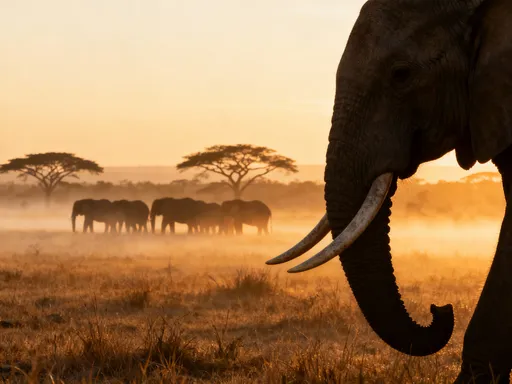
One unforgettable dawn, I watched a family of elephants emerge from the treeline, their massive forms gliding silently across the open field. Backlit by the rising sun, they appeared as dark silhouettes, their trunks swaying gently as they moved toward a distant waterhole. The scene was almost dreamlike—no sound but the soft crunch of footsteps and the occasional low rumble from one of the calves. In that moment, the boundary between observer and observed faded. There was no need for commentary or interpretation; the image spoke of patience, kinship, and survival. Photography enthusiasts often speak of capturing “the perfect shot,” but sometimes, the most powerful experiences happen when the camera stays in the bag, and the soul simply absorbs what’s in front of it.
The early morning hours also bring heightened animal activity. Predators return from nocturnal hunts, while grazers take advantage of the cooler temperatures to feed before the heat of the day. Birds begin their chorus—lilac-breasted rollers call from perches, while fish eagles circle above rivers, scanning for movement below. For visitors, this is the ideal time to drive slowly along the park’s network of roads, windows down, senses alert. The combination of light, sound, and motion creates an immersive experience that no zoo or documentary can replicate. More than just viewing wildlife, it’s about feeling part of a rhythm older than civilization itself.
Hidden Landscapes Beyond the Main Roads
While most visitors follow the well-maintained tar and gravel roads, some of Kruger’s most breathtaking scenery lies off the beaten path. Guided walking safaris and 4x4 trails open access to secluded corners of the park, where the bush remains undisturbed by vehicle traffic. These remote areas—such as the remote sandstone ridges near Tshokwane or the quiet bends of the Letaba River—offer a different kind of intimacy with nature. Without the hum of engines or the chatter of tourist groups, the sounds of the wild become clearer: the snap of a twig, the whisper of wind through leaves, the distant splash of a hippo submerging.
One such journey took me through a stretch of mopane forest near the northern section of the park, where towering trees formed a canopy that filtered sunlight into dappled patterns on the ground. The air was rich with the earthy aroma of decaying leaves and the occasional bloom of wild jasmine. Birdlife thrived here—woodland kingfishers perched on low branches, while go-away birds called their distinctive warning cries. A pair of klipspringers darted across a rocky outcrop, their sure-footed grace a marvel against the uneven terrain. Unlike the open savannahs where animals are easily spotted, this environment required patience and attentiveness. Yet, the rewards were deeper: a sense of discovery, of being a guest in a world that does not perform for audiences.
These hidden zones also showcase Kruger’s resilience. In areas less frequented by tourists, vegetation grows denser, and natural cycles proceed without interruption. Fallen trees decompose slowly, enriching the soil. Termite mounds rise like ancient monuments, supporting entire micro-ecosystems. Even animal tracks tell stories—lion prints overlapping those of buffalo, evidence of a recent encounter that played out under cover of darkness. By stepping away from the main routes, travelers gain a more nuanced understanding of the park’s complexity. They begin to see Kruger not as a collection of highlights, but as a vast, interconnected web of life, where every creature and plant has a role to play.
The River Systems: Lifeblood of the Park
Kruger’s rivers are more than scenic features—they are the lifelines that sustain the entire ecosystem. The Sabie, Olifants, Letaba, and Luvuvhu Rivers carve through the landscape, creating corridors of green that contrast sharply with the surrounding dry bushveld. During the dry winter months, when water becomes scarce, these rivers attract an astonishing concentration of wildlife. Herds of elephant, buffalo, and zebra travel great distances to drink, while predators lurk nearby, waiting for opportunity. The riverbanks become stages for some of nature’s most dramatic moments, not through violence, but through the simple, urgent need to survive.
At dusk, one of the most powerful scenes unfolds along the Sabie River. As the sun dips below the horizon, casting a golden glow across the water, hippos emerge from their daytime slumber in the shallows. Their grunts and bellows echo across the floodplain, a reminder of their dominance in this aquatic realm. Crocodiles lie motionless on sandbanks, their eyes barely visible above the surface, while kingfishers dive with precision to catch small fish. On the banks, a herd of kudu approaches cautiously, ears twitching, ready to flee at the slightest disturbance. The tension is palpable, yet balanced—a dance of coexistence shaped by instinct and experience.
These river systems also support rich plant life. Fever trees with their distinctive yellow bark line the waterways, their roots drawing moisture from underground sources. Fig trees grow from rocky crevices, their sprawling roots gripping the stone like fingers. In some areas, dense reeds and papyrus form impenetrable thickets, sheltering birds like the African finfoot and the elusive Pel’s fishing owl. Conservation efforts focus on maintaining the health of these rivers, especially in the face of climate variability and upstream water usage. Rangers monitor water quality, track animal movements, and manage invasive plant species to ensure that these vital arteries continue to flow freely. For visitors, a stop at a river overlook is not just a chance to cool off or snap a photo—it’s an invitation to witness the pulse of the park itself.
Ancient Trees and Timeless Vistas
Among Kruger’s most enduring landmarks are its ancient trees—silent sentinels that have watched centuries pass. The baobab, often called the “tree of life,” is perhaps the most iconic. With trunks that can exceed five meters in diameter and canopies that spread like giant umbrellas, these trees stand as monuments to resilience. Some are believed to be over 1,000 years old, having survived droughts, fires, and generations of animals rubbing against their bark. Their hollow interiors have served as shelters, storage spaces, and even makeshift prisons in historical times. Today, they stand as symbols of continuity, their gnarled forms contrasting beautifully against the open sky.
Equally significant are the marula trees, whose fruit feeds elephants, monkeys, and birds each summer. The arrival of ripe marulas signals a seasonal shift, drawing wildlife to specific areas in search of nourishment. Local communities have long used the fruit to make jams, juices, and even a traditional fermented beverage. In Kruger, these trees are protected, allowed to grow and drop their fruit naturally, contributing to the park’s ecological balance. Standing beneath one during the fruiting season, one can hear the thud of marulas falling to the ground, quickly claimed by foraging animals.
There is a profound stillness that comes from sitting beneath such a tree. Time seems to slow. The breeze moves through the leaves with a soft whisper. A hornbill may call from a high branch, or a monitor lizard might sun itself on the roots. In these moments, the rush of modern life feels distant, irrelevant. These trees do not measure time in hours or days but in seasons and cycles. They remind us that nature operates on a different scale—one that demands patience, respect, and humility. To witness them is to connect with a deeper rhythm, one that predates cities, technology, and even language.
Night Skies and the Silence of the Wild
When darkness falls in Kruger, a new dimension of beauty emerges. Far from city lights, the night sky reveals its full glory—a vast expanse of stars so dense they seem within reach. The Milky Way arcs overhead like a river of light, while constellations unfamiliar to urban dwellers shine with startling clarity. This celestial display is not just a visual wonder; it’s a reminder of how small we are in the grand scheme of the universe. Seated outside a campsite, wrapped in a blanket, one can feel both insignificant and deeply connected at the same time.
The sounds of the night add to the experience. Without the distraction of daytime activity, the ears become more attuned to subtle noises—the distant whoop of a hyena, the rustle of a genet in the underbrush, the rhythmic chirping of crickets. Occasionally, the air is pierced by the eerie call of a barn owl or the deep cough of a leopard on the hunt. These sounds, once unsettling, gradually become familiar, even comforting. They are part of the bush’s nightly rhythm, a soundtrack to the unseen lives unfolding in the dark.
Moonlit nights offer a different kind of magic. Under a full moon, the landscape is bathed in silver light, transforming the plains into a ghostly expanse. Shadows stretch long, and movement becomes more visible. Fireflies flicker like tiny stars among the grass, their bioluminescence adding a touch of enchantment. Some guided night drives use red-filtered lights to minimize disturbance, allowing visitors to observe nocturnal animals such as bushbabies, porcupines, and servals without disrupting their behavior. These experiences deepen one’s appreciation for the complexity of life in Kruger—how every creature, from the tiniest insect to the largest elephant, plays a role in the balance of the ecosystem.
Traveler’s Guide: Experiencing the Scenery Like a Local
To truly appreciate Kruger’s landscapes, timing and approach matter as much as destination. The best hours for scenic viewing are early morning and late afternoon, when light is soft and wildlife is active. Midday, when temperatures soar, is better suited for rest or visiting shaded picnic sites. Driving slowly along secondary roads—such as the S41 between Satara and Olifants or the H6 near Lower Sabie—increases the chances of encountering both animals and stunning vistas. Elevated viewpoints like Sunset Dam or Nshawu Pan offer panoramic perspectives, especially during golden hour.
Choosing the right camp enhances the experience. Rest camps such as Skukuza, Lower Sabie, and Pretoriuskop are well-located and offer comfortable amenities, but smaller bushveld camps like Olifants or Tsendze provide a quieter, more immersive atmosphere. Staying in a camp with river access or open views allows for uninterrupted sunrise and sunset moments. Booking guided walks or 4x4 adventures through authorized operators adds depth to the visit, offering expert insights into plant life, animal behavior, and conservation efforts.
Photographers should rely on natural light whenever possible, avoiding flash to prevent disturbing animals. A polarizing filter can enhance sky contrast and reduce glare on water surfaces. However, the most meaningful images often come not from technical perfection but from emotional truth—a mother rhino shielding her calf, a lone tree on a hilltop, the reflection of stars in a still pool. Beyond photography, practicing slow travel—spending time in one area rather than rushing between sites—allows for deeper connection. Simply sitting quietly, observing, and listening can yield moments more memorable than any checklist sighting.
Equally important is responsible tourism. Visitors are asked to stay on designated roads to prevent soil erosion and habitat damage. Feeding or approaching animals is strictly prohibited, as it disrupts natural behaviors and poses safety risks. Littering is not only unsightly but dangerous to wildlife. By following park rules and embracing a mindset of respect, travelers contribute to the long-term preservation of Kruger’s beauty. After all, the goal is not just to see the wild, but to ensure it remains wild for generations to come.
Kruger National Park is more than a wildlife haven—it’s a vast, breathing landscape that rewards those who look beyond the animals to see the soul of the wild. Its beauty isn’t in spectacle alone, but in the quiet details: a shadow on the grass, a tree on the horizon, the hush before sunrise. To experience Kruger fully is to fall in love with the land itself.