This Is What No One Tells You About Colombo
You know that moment when a city surprises you? Colombo did exactly that to me. I expected traffic and temples, but instead found vibrant street art, spicy hoppers at dawn, and locals who made me feel like family. This isn’t just a stopover city — it’s a sensory overload in the best way. Let me take you through the real Colombo, where every alley has a story and every meal feels like a celebration. More than a gateway to Sri Lanka’s hill country or southern beaches, Colombo is a living mosaic of cultures, flavors, and rhythms waiting to be discovered. It challenges expectations with its resilience, warmth, and quiet beauty hidden beneath the urban hum.
First Impressions: Beyond the Layover Myth
For many travelers, Colombo is the city you fly into, not the one you come to see. Arriving at Bandaranaike International Airport, located about 35 kilometers south of the city center, most visitors are already thinking about their next destination — perhaps Kandy’s sacred temple or the coastal calm of Galle. But what if the first chapter of your Sri Lankan journey was also one of the most revealing? The transfer into Colombo, whether by private car or pre-arranged shuttle, unfolds like a slow introduction to the island’s pulse. Palm trees line the highway, billboards switch between Sinhala, Tamil, and English, and the landscape gradually shifts from open fields to dense urban fabric.
By the time you reach the heart of Colombo, the myth of the city as merely a transit point begins to dissolve. Unlike the quiet reverence of ancient Anuradhapura or the laid-back rhythm of the south coast, Colombo thrums with a modern energy that coexists comfortably with its colonial past. British-era buildings with wide verandas and shuttered windows stand beside sleek glass-fronted offices. The old Dutch Hospital complex, once a maritime medical facility, now houses boutique restaurants and artisanal coffee bars, symbolizing the city’s careful evolution. There’s a balance here — not between old and new, but between memory and momentum.
One of the most vivid introductions to Colombo’s daily life is Galle Face Green, the ocean-facing promenade that comes alive at dusk. Families spread picnic sheets on the grass, children fly kites against the orange sky, and vendors sell skewers of grilled seafood and glasses of king coconut water. The Indian Ocean breeze cuts through the city’s heat, offering relief and a sense of openness. This is where Colombo exhales — a place for leisure, connection, and quiet reflection. The constant flow of tuk-tuks, buses, and motorbikes along the adjacent road reminds you that the city never fully stops, yet here, for a moment, time slows.
Street vendors are everywhere, not as a nuisance but as essential threads in the city’s social fabric. A man balancing trays of short eats — flaky pastries filled with spiced potato or chicken — walks down the sidewalk calling out his wares. Women in saris sit beside baskets of jasmine garlands, their fragrance lingering in the humid air. These small moments, repeated across neighborhoods, form the rhythm of Colombo’s urban life. It’s a city that rewards curiosity, where stepping off the main road often leads to a hidden temple, a local tea shop, or a burst of color from a hand-painted sign.
Morning Rituals: How Locals Start Their Day
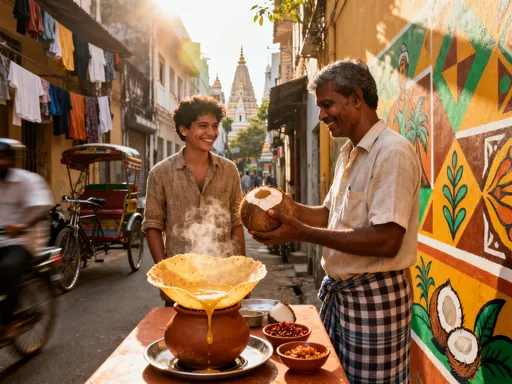
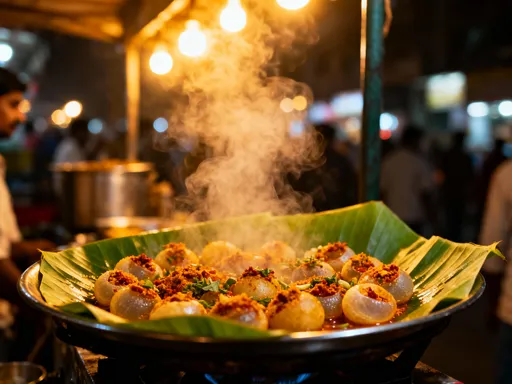
If you want to understand a city, follow its morning routine. In Colombo, the day begins early, not with coffee, but with the sizzle of hoppers in a curved pan. Hoppers — known locally as *appa* — are bowl-shaped pancakes made from fermented rice flour and coconut milk. Crispy at the edges and soft in the center, they’re often served with a runny egg in the middle and accompanied by spicy sambal and a wedge of lime. Eating them at dawn in a small family-run eatery, where the owner greets regulars by name, offers a taste of Colombo’s heart.
These breakfast spots, often tucked into residential corners or near bus stops, are more than places to eat — they’re community hubs. Men in office shirts queue alongside construction workers, all waiting for the same simple meal. The air is thick with the scent of frying onions, curry leaves, and mustard seeds. Coconut is the unsung hero of Sri Lankan cuisine, appearing in milk, oil, grated form, and even as a garnish. Its richness tempers the heat of chili and black pepper, creating a balance that defines the island’s flavor profile.
To go deeper, visit a local market like Maradana or Pettah Market early in the morning. These are not tourist attractions but working markets where housewives bargain for vegetables, fishermen unload their catch, and spice vendors display pyramids of turmeric, cinnamon, and dried chilies. The colors are overwhelming — bright red tomatoes, emerald bitter gourds, golden pineapples. The sounds are just as vivid: the clang of metal scales, the chatter of bargaining, the occasional crow of a rooster from a nearby poultry stall.
What stands out is the warmth of interaction. When you show genuine interest — asking the name of a strange fruit or how to prepare a particular leaf — vendors light up. They might hand you a piece of ripe mango to taste or offer a lesson in peeling a jakfruit. There’s no pressure to buy, only a quiet pride in sharing their world. This unforced hospitality is not performance; it’s simply how people live here. In a city of nearly 600,000 residents, strangers treat you like a guest, not an intruder.
Art & Identity: Street Murals That Speak Volumes
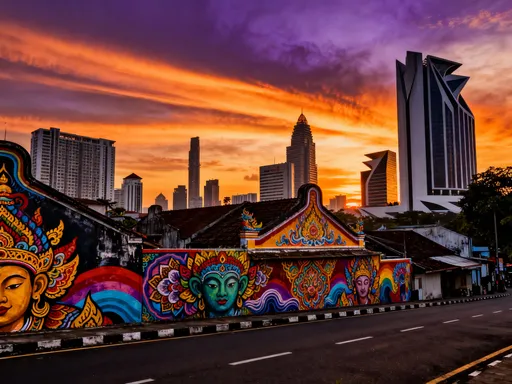
Wander through the narrow lanes of Pettah, Colombo’s historic trading quarter, and you’ll notice something unexpected: walls alive with color. Once seen as a chaotic maze of wholesale shops and crowded streets, Pettah has become an open-air gallery where street art tells stories of identity, resistance, and hope. These murals are not mere decoration — they are conversations painted in bold strokes. One depicts a young girl in a school uniform holding a lotus, her eyes filled with determination. Another shows a fisherman casting a net made of musical notes, symbolizing the blending of tradition and creativity.
The rise of public art in Colombo reflects a broader cultural shift. After decades shaped by civil conflict and economic challenges, a new generation of Sri Lankans is reclaiming public spaces through creative expression. Artists use walls as canvases to process history, celebrate diversity, and imagine a more inclusive future. The messages are often subtle — a dove hidden in a pattern of leaves, a Sinhala and Tamil word woven together — but their presence is powerful. In a city where languages, religions, and ethnicities intersect daily, art becomes a bridge.
Meeting one of these artists, a young woman named Nisha who studied fine arts in Colombo and now leads community mural projects, revealed the deeper purpose behind the paintings. “We don’t just paint for beauty,” she said, wiping paint from her hands. “We paint to remind people that this city belongs to all of us.” Her team works with schoolchildren, shop owners, and even city officials to create murals that reflect local stories. One project transformed a dull alley into a vibrant timeline of Pettah’s history, from its days as a spice trade hub to its present as a melting pot of cultures.
These artworks do more than beautify — they spark dialogue. A mural honoring female tea pluckers sparked conversations about labor rights. Another, showing a melting ice cream cone beneath a scorching sun, quietly addressed climate change. In a society still learning to speak openly about complex issues, art offers a safe language. For visitors, walking through these neighborhoods becomes an act of witnessing — not just of talent, but of courage and resilience.
Faith in Motion: Temples, Dargahs, and Places of Peace
Religion is not separate from daily life in Colombo — it is woven into its rhythm. One of the most profound experiences a visitor can have is attending the morning puja at Gangaramaya Temple, one of the city’s most important Buddhist sites. Located on the shores of Beira Lake, the temple complex is a blend of architectural styles — Thai, Indian, Chinese, and Sri Lankan — reflecting the island’s spiritual diversity. At sunrise, the air fills with the scent of sandalwood and jasmine as monks in saffron robes chant in unison. The sound is deep and steady, like a heartbeat.
Visitors are welcome, but with expectations of respect. Shoes must be removed before entering any sacred space. Shoulders and knees should be covered. Silence is observed in prayer halls. These rules are not rigidly enforced by guards, but by a shared understanding of reverence. Watching a family light oil lamps, place flower offerings, and bow in unison is a reminder of how faith grounds people. For many Sri Lankans, these rituals are not acts of obligation, but moments of connection — to the divine, to ancestors, to community.
Just a few kilometers away stands the Jami Ul-Alfar Mosque, a striking red-and-white building that dominates the skyline of the Pettah district. Built in 1909, its Indo-Saracenic architecture features domes, minarets, and intricate geometric patterns. The mosque serves Colombo’s Muslim community, many of whose ancestors were traders from the Middle East and South India. Non-Muslims can visit outside of prayer times, and the caretakers often offer quiet explanations of Islamic practices. The peaceful courtyard, shaded by tall trees, offers a moment of stillness amid the surrounding bustle.
What is remarkable in Colombo is not the presence of multiple religions, but their coexistence. Within a single neighborhood, you might pass a Hindu kovil with colorful statues of deities, a Catholic church with stained-glass windows, and a Buddhist meditation center — all within walking distance. This harmony is not without challenges, and Sri Lanka has faced periods of tension. Yet in daily life, especially in Colombo, people of different faiths live side by side, celebrating each other’s festivals and respecting each other’s spaces. This quiet pluralism is one of the city’s quietest, yet most powerful, strengths.
Rhythm of the City: From Jazz Bars to Traditional Drumming
As the sun sets, Colombo’s soundtrack changes. The honking of tuk-tuks gives way to the strum of guitars, the beat of drums, and the hum of conversation in cozy cafés. Music in Colombo is not just entertainment — it’s a living thread connecting past and present. One evening, I found myself in a small jazz bar in the Cinnamon Gardens area, where a local band blended Coltrane-inspired solos with melodies drawn from traditional Sinhala folk songs. A woman sang in both English and Sinhala, her voice weaving between jazz phrasing and the lyrical flow of island poetry.
This fusion is not accidental. Sri Lanka has a rich musical heritage, from the thunderous rhythms of Kandyan drumming to the gentle melodies of baila music, a genre with Portuguese roots. In Colombo, these traditions are not locked in museums — they are alive in performances, schools, and living rooms. Attending a cultural show at the Nelum Pokuna Theatre, I watched dancers in ornate costumes move with precise, almost hypnotic grace, their ankle bells marking the beat. The drummers, seated cross-legged, played with such intensity that their shoulders glistened with sweat. This was not a tourist show — it was a celebration of heritage, attended by families and elders who nodded along with recognition.
What’s emerging in Colombo is a vibrant underground music scene. Young artists are blending Sinhala lyrics with hip-hop beats, electronic music, and reggae rhythms. Bands perform in small venues, often in repurposed warehouses or rooftop spaces. These artists sing about identity, social change, and the challenges of urban life. Their music is raw, honest, and deeply local. For listeners, it offers a way to understand the city’s soul — not through postcards, but through poetry set to sound.
Music also plays a role in healing. After years of conflict and natural disasters, artistic expression has become a form of resilience. Community music programs teach drumming to children in underserved areas. University students organize open-mic nights to share stories through song. In a city where words can sometimes fail, rhythm speaks. Whether it’s the steady beat of a traditional *yak beraya* drum or the soft strum of an acoustic guitar in a café, music in Colombo reminds us that culture is not static — it breathes, evolves, and connects.
Green Escapes: Finding Calm in the Urban Jungle
Amid the noise and movement, Colombo holds pockets of stillness. Viharamahadevi Park, named after a revered queen, is the city’s green heart. Once known as Victoria Park during colonial times, it was redesigned in the 1950s to reflect Sri Lankan heritage. Today, it’s a sanctuary where office workers take lunch breaks, couples stroll under canopy trees, and children chase butterflies near the lotus pond. The park is not manicured like European gardens — it’s lush, a little wild, full of birdsong and the rustle of palm fronds.
Birdwatching here is a quiet joy. Bright blue bee-eaters dart between branches. Black-hooded orioles call from the treetops. Even in the city center, nature finds a way. People-watching is equally rewarding. An elderly man feeds pigeons with a gentle smile. A group of schoolgirls in navy uniforms laugh over shared snacks. A yoga instructor leads a small class on the grass at sunrise. These moments, simple and unscripted, reveal the city’s softer side.
The importance of urban greenery in Colombo cannot be overstated. With rising temperatures and dense construction, parks like Viharamahadevi and the smaller Dehiwala Municipal Park provide essential relief. They are not just recreational spaces — they are environmental lungs. The city has begun to recognize this, with initiatives to expand green corridors and protect mature trees during development projects. Community groups organize clean-up drives and tree-planting events, showing that environmental care is becoming part of civic pride.
Sitting by the lotus pond at dusk, watching the water lilies glow in the fading light, it’s easy to reflect on Colombo’s contrasts. A city of noise and stillness. Of ancient rituals and modern beats. Of crowded markets and quiet temples. It doesn’t try to be perfect — it simply is. And in that authenticity, there is peace. These green spaces, small as they may seem, are where the city catches its breath — and where visitors can do the same.
Final Thoughts: Why Colombo Stays With You
Colombo doesn’t reveal itself all at once. It unfolds slowly, in fragments — a shared meal, a mural on a backstreet wall, the sound of chanting at dawn. It challenges the idea that authentic travel means escaping cities. Instead, it proves that cities, too, can offer depth, connection, and beauty. This is not a place of polished tourist attractions, but of real life — messy, vibrant, and deeply human.
The value of visiting Colombo lies not in checking off landmarks, but in slowing down and engaging. It’s in learning to say “Ayubowan” — the traditional greeting meaning “may you live long” — and seeing the smile it brings. It’s in accepting a cup of Ceylon tea from a stranger who wants to practice English. It’s in understanding that hospitality here is not a service, but a way of being.
For those planning a visit, the best time to experience Colombo is between December and March, when the weather is drier and more comfortable. The city is walkable in short stretches, but tuk-tuks and ride-hailing apps make navigation easy. Staying in neighborhoods like Cinnamon Gardens or Bambalapitiya offers a balance of comfort and local flavor. Always carry water, wear light clothing, and respect cultural norms, especially at religious sites.
Colombo isn’t flawless. Traffic can be intense. Some areas are still recovering from years of neglect. But it’s alive — pulsing with stories, flavors, and rhythms that stay with you long after you leave. It doesn’t try to impress; it simply welcomes. And in a world where travel often feels transactional, that kind of authenticity is rare — and unforgettable.